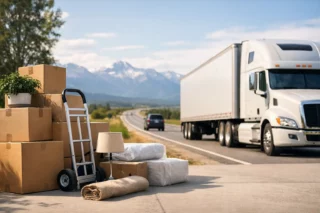
The definition does the work here. Stockton Municipal Code 10.08.010 defines a commercial vehicle as “any self-propelled vehicle having a manufacturer’s rated capacity of over one and one-half tons, designated for or engaged in, carrying merchandise, freight or other material”. That is a low bar — a 26-foot moving truck clears it several times over, and so does a much smaller van.
Where it can drive, and where it can sit. Section 10.08.030 requires commercial vehicles and anything over three tons gross weight to stay on designated truck routes, “except when necessary to traverse another street or streets to a destination for the purpose of loading or unloading”. Section 10.08.040 then makes it unlawful to stop, stand or park such a vehicle on those restricted streets except for the purposes section 10.08.030 permits. Read together: the truck may leave the truck route to reach your address and may stop there to work, but the loading has to be the reason it is parked.
The truck route list is not in the code. Section 10.08.020 adopts a “Truck Traffic Route Map” held by the City Clerk and published on the city’s website rather than printing the streets in the ordinance. That means the approach has to be planned against the current map, not against a list anyone can quote from memory, and the map has been revised as recently as 2024.
What Stockton does not have. There is no temporary no-parking permit, no tow-away sign program and no curb-reservation scheme for moving trucks — we checked the traffic chapter, the encroachment permit list and the current Public Works fee schedule. The nearest thing is a $228 “Zone Permit” that establishes a standing on-street loading zone, which is not a day-of reservation and is not what a household move needs. So nothing holds the curb for you.
Fees and the route map change. We re-check before move day rather than relying on what was true last year.
Permit and access details confirmed against the city's own published guidance. Rules change — we re-check before move day.